
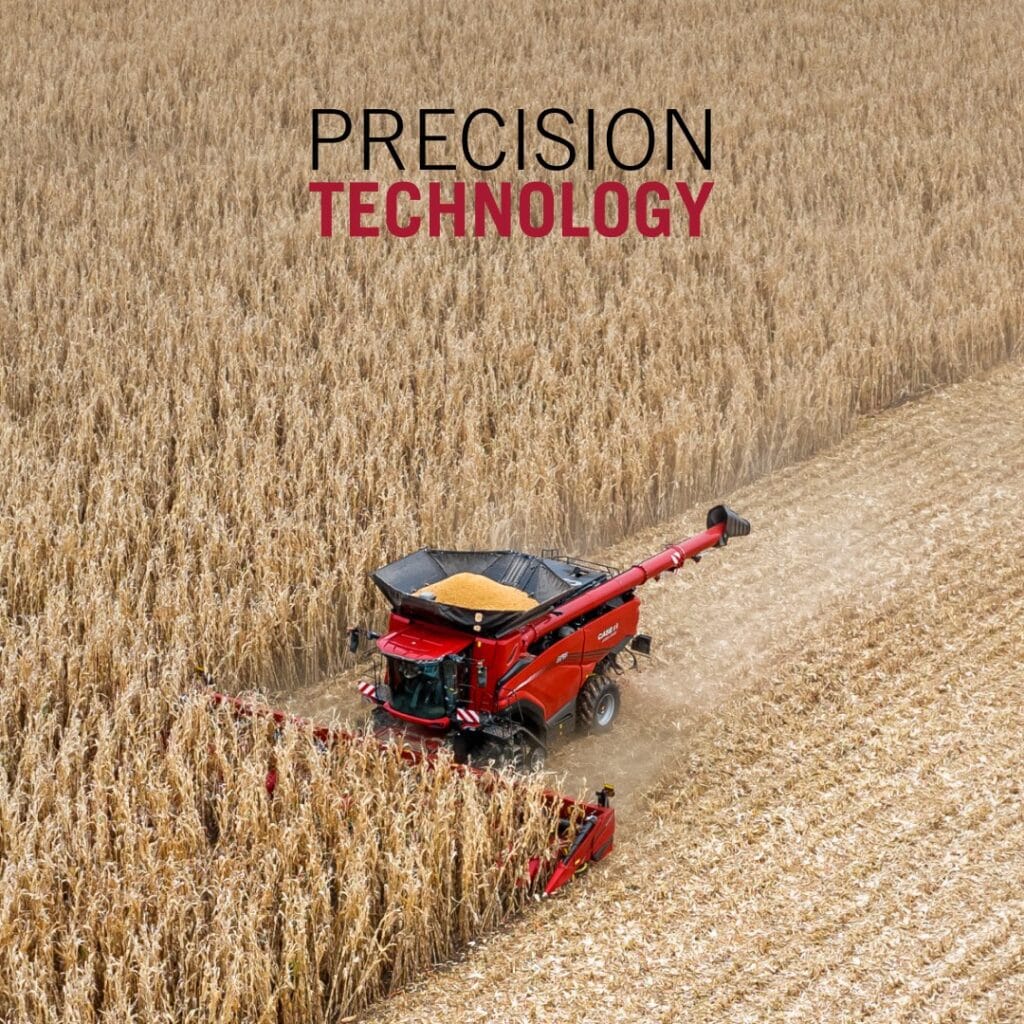

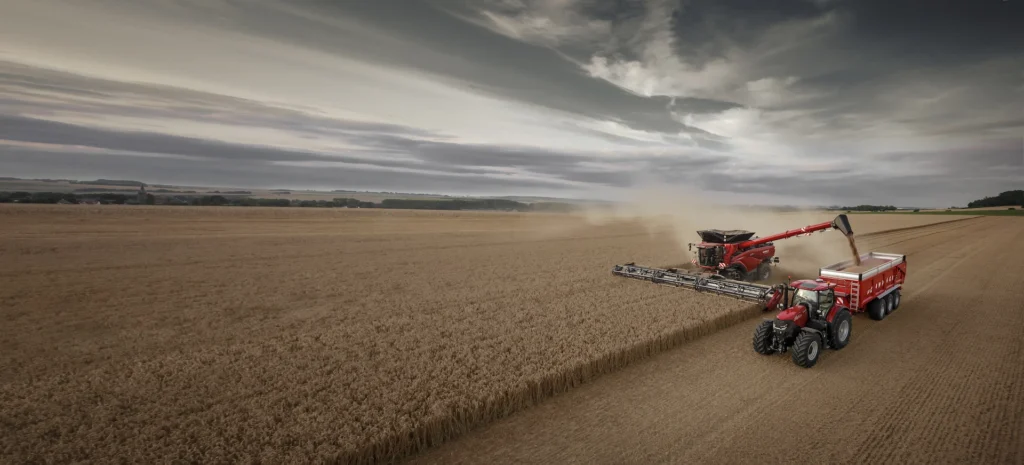
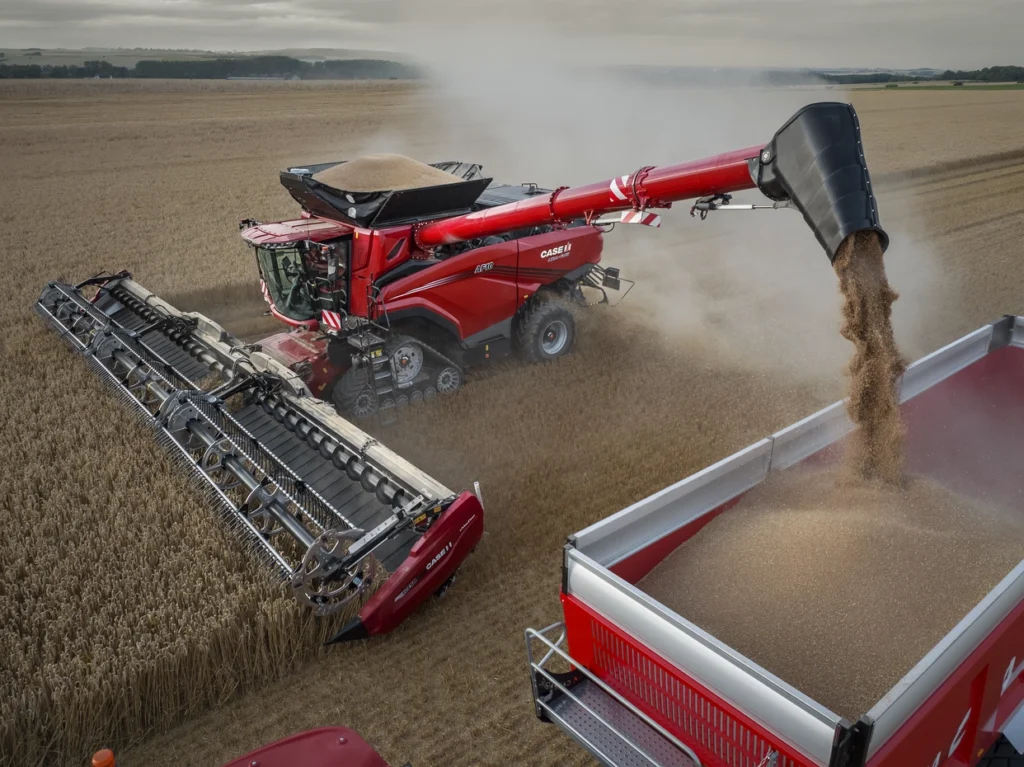


When Case IH launched the AF Series combines in 2024, the company didn’t just refresh a product line — Case IH rebuilt the flagship harvester from the ground up. With the dual-rotor AF11 at the top of the range and the completely re-engineered single-rotor AF9 and AF10 alongside it, the AF Series is the most powerful combine lineup Case IH has ever offered, and it makes a serious case for being the best machine on the market today.
Here’s a number that stopped us in our tracks: the AF9 and AF10 share fewer than 500 parts with the 260 Series. That’s a near-total redesign of a rotary platform that’s been proving itself in paddocks for nearly 50 years.
The heart of the single-rotor machines is the new AFXL rotor — 40% longer than the 260 Series rotor, with roughly 50% more separation area. In plain terms: more grain in your tank, less on the ground, even when the crop turns tough or damp.
At the top of the range sits the AF11 with its AFXL2 dual-rotor system — 45% more threshing and separation area and the highest total capacity Case IH has ever built into a combine. Six threshing modules, twelve separating modules, HX+ rasp bars, and a stepped rotor cage that loosens the crop mat for cleaner separation at serious throughput. The Power Plus CVT rotor drives — an industry exclusive, according to Case IH — even includes rotor reversing, so a tough slug of crop doesn’t mean climbing out of the cab.
One thing we’ll flag: Case IH launched the AF11 as a North America-only model, but that’s changing. Limited AF11 units will be available locally in late 2026 — and one of them is coming to RedMac. Talk to us about the AF9 and AF10, which we can put in front of you now, or get your name down early for a look at the AF11.
Power first. The AF10 runs a 775-horsepower FPT Cursor 16, and the AF9 delivers 634 horsepower from its Cursor 13 — the whole series sits at Class 9 or above.
Then there’s grain handling, which is where this machine really earns its keep on big programs. The AF10 comes standard with a 567-bushel (20,000-litre) grain tank — Case IH says it’s the largest in the industry — while the AF9 carries 455 bushels. Spec the fast unload and you’re moving grain at 6 bushels per second, emptying a full tank in around 100 seconds by the factory’s figures. Fewer stops, faster unloads, more hectares before dark. That’s the whole game.
And the early feedback from overseas for the AF11 has been genuinely impressive. Some operators who ran early AF11 units in dry Canadian wheat reported two machines doing the work of three previous-generation 9250s with around 20% more total capacity — early reports from favourable conditions, we’ll grant you, but not the kind of numbers you hear every day.
The cleaning system got the same treatment: a two-part cleaning shoe with far more surface area that shifts sideways to keep the sieves loaded evenly on slopes, plus radar-based spread automation that lays residue evenly across more than 15 metres — even when the wind picks up.
If there’s one takeaway from our 2025 demo season, it’s this: for many growers in our region, the single-rotor AF10 changes the maths on fleet size. Based on what we saw from Moora to Three Springs, operations currently running two combines could realistically cover the same program with one AF10 — and larger programs running three could downscale to two — while still putting clean, consistent grain in the bin.
The reasons stack up quickly. With reported spot rates around 100 tonnes per hour and a 567-bushel tank emptying in about 100 seconds, the AF10 simply covers ground at a rate that used to take two mid-size machines. And every combine you park is a full set of costs off your books: one less operator to find, house and pay through harvest — no small thing with skilled seasonal labour getting harder to source every year — one less machine burning fuel across the program, one less set of servicing, insurance, shedding and eventual replacement cost. Case IH’s redesigned inline drivetrain sharpens the fuel story further, putting more of every litre to work at the rotor instead of losing it through belts and gearboxes.
Harvest Command automation is what makes the consolidation practical rather than just theoretical: with the machine fine-tuning rotor speed, fan, sieves and ground speed on the go, your one machine performs at expert level for every hour of the day, regardless of who’s in the seat. Fewer machines, fewer operators, less fuel, less capital tied up in iron — and no compromise on the sample. For large operations, that’s not an incremental saving. That’s a restructure of your harvest cost base.
AF10 on duals with a MacDon FD261 – Harvest 2025 Demo Program
Chris Mulder, Product Specialist – RedMac Ag, Three Springs Branch
“Case IH has clearly invested serious R&D into the AF Series, and it shows. We had the pleasure of showcasing the AF10 to customers across the Mid West in 2025, in a variety of crop conditions across both canola and wheat. It proved extremely reliable from start to finish, and refreshingly simple compared to other makes on the market. It has everything you could want in a harvester when it comes to ease of operation, and from a technician’s point of view, it’s exceptionally well designed.
“Having worked in service for over 30 years with product knowledge across various brands throughout my career, I can honestly say the AF Series reflects Case IH’s continued commitment to agricultural innovation and to our valued farmers. Case IH has always produced great machines, and the new AF Series builds on generations of the proven Axial-Flow — now featuring a redesigned inline drivetrain that offers numerous benefits, from fuel savings to increased power, while reducing maintenance issues down the track.
“The engine bay is open and accessible, with excellent airflow keeping it remarkably clean and free of chaff — extremely important when you’re harvesting on 40-degree days in WA. At the push of a button you can open the rock trap, and another button de-slugs the machine if it ever blocks — all without leaving the seat. The levelling system is simple but highly effective; it just works.
“The only problem I ran into during the demos? Finding enough chaser bins to keep up with it!”
“The technology package is where the AF10 really set itself apart. Harvest Command automation constantly monitors and adjusts the machine’s settings on the go — fine-tuning rotor speed, fan speed, sieves and ground speed to suit the conditions — so the operator gets maximum performance without needing to be an expert. It performed brilliantly throughout the demos, delivering huge capacity, minimal losses and a great sample. FieldOps ties it all together, giving owners and managers real-time visibility of the machine from anywhere — monitoring performance, tracking data and even allowing remote support, which keeps downtime to an absolute minimum during the critical harvest window.
“The cab that comes standard is genuinely luxurious, featuring a leather heated, cooled and massaging seat, along with an intuitive control centre and two Pro 1200 screens that can be fully customised to suit any operator.
Here’s our favourite part of the walk-around, because it’s where the AF Series genuinely stands apart: no subscription fees.
Every AF Series combine comes equipped with Harvest Command automation — 16 sensors controlling seven combine adjustments (sieves, fan speed, rotor speed, ground speed and more), cutting what the operator has to watch from twelve functions down to three. Case IH says it delivers expert-operator productivity no matter who’s in the seat, and that matters when you’re relying on seasonal help at the busiest time of year.
Dual Pro 1200 touchscreens come standard. FieldOps puts machine and agronomic data on your phone. And on qualifying machines, Case IH’s Connectivity Included program means no subscription or access fees for the lifetime of the modem. When customers ask us how that compares to what other brands are charging annually for their software stacks, we just smile.
Throw in RowGuide Pro guidance and a cab with a heated, cooled, massaging leather seat, and hour fourteen of the day feels a lot more like hour one.
We get this question every week, so here’s our straight answer.
Against hybrid and walker machines like the Claas Lexion, the Axial-Flow argument is the same one that’s won customers for decades: one rotor does the threshing and separating in one simple, proven system, which Case IH credits for gentle handling and excellent grain quality — and that rotor is now 40% longer. Against John Deere’s X9, we point to the industry-leading claimed tank size, the 6 bu/sec unload, and factory connectivity with no ongoing fees.
Then there’s the Fendt Ideal. On paper, the Ideal 10 claims a slightly higher peak horsepower figure — but horsepower on a spec sheet doesn’t fill a chaser bin, and this is where the numbers that actually matter swing red. The Ideal’s grain tank tops out at 485 bushels (17,100 litres) against the AF10’s standard 567 bushels — over 80 bushels more per fill on the Case IH — and with both machines unloading at 6 bushels per second, the AF simply spends more of its day cutting and less of it sitting on the auger.
It’s under the shields, though, where we think the AF Series really pulls away. Case IH redesigned the AF around an inline drivetrain — engine power flowing straight through to the rotor with far fewer belts, pulleys and gearboxes in between. In our view that’s a fundamentally better way to build a harvester: every belt and gearbox you remove is a wear point that can’t fail at 4 p.m. on a 40-degree day, power that isn’t lost between the engine and the rotor, and one less thing for a technician to chase. Our own product specialist put it best after a season of demos — the inline layout delivers fuel savings and more usable power while cutting down the maintenance issues you’d otherwise be dealing with down the track. Simpler machines harvest more days per year. It’s that straightforward.
The bigger question, though, is what happens after the sale. Before signing any deal, we’d urge any buyer to do the sums on the full picture: how far a technician has to travel to reach your paddock, what those call-out kilometres cost at harvest rates, how long you’ll wait for parts through a very stretched dealer network, and what a week of downtime in the middle of harvest is really worth. The Case IH parts and service network behind Axial-Flow machines has been built out over nearly five decades — when something needs attention, the support is local, stocked, and proven, not a promise.
As for New Holland’s CR11 — we’ll be upfront, since you most probably already know: both brands sit under the CNH umbrella, and the twin-rotor AF11 shares its core drivetrain and powertrain platform with the CR11. But shared hardware doesn’t mean shared machines. The automation systems are brand-exclusive — New Holland runs its IntelliSense™ Combine Automation, while the AF Series carries Case IH’s Harvest Command™, each built and tuned for its own flagship. What you get on the red side is Case IH’s automation and precision package, the Axial-Flow parts and support ecosystem, and us — a dealership that’s backed these machines through decades of harvests and will be here at 9 p.m. when you need a part.
More power. More capacity. More automation. Less grain loss and no subscription fees — with fuel savings claimed by both the factory and the people who’ve run it. The Case IH AF Series isn’t just an incremental step — it’s the machine the rest of the industry will spend the next decade chasing. For farmers looking to cover more hectares in fewer hours with cleaner grain in the tank, harvest just got a new benchmark. And it’s painted red.
A great machine from a global, innovative brand like Case IH is only half the story. The other half is who stands behind it — and this is where we’ll put our hand up.
Agriculture is moving faster than it ever has. Automation, connectivity, precision data — the technology in a modern harvester would have been science fiction a generation ago, and it isn’t slowing down. RedMac’s answer is to set the standard locally: knowledgeable, seasoned staff and Product Specialists who don’t just stand behind the values of the global brands we represent, but stand behind the people who matter most — our customers. Because in this fast-paced world of agricultural innovation, support matters.
RedMac has a dedicated Product Specialist at each branch — Chris Mulder at Three Springs and Tim King at Moora — with a combined 50+ years of experience across service and sales. These are not generalist salespeople. They are seasoned specialists with decades of hands-on experience servicing, running and selling this equipment. They understand our customers’ operations intimately — the crops, the conditions, the pressure of harvest — and they bring that real-world knowledge to every conversation and every machine handover.
Our approach is simple: put the right expertise in front of the customer. A machine set up by someone who truly knows it performs better from day one — and a farmer who understands what their machine can do gets more out of every harvest.
When you purchase through RedMac, your dedicated Product Specialist comes to your property to set up the machine for your specific crops and conditions — header calibration, Harvest Command mode setup, FieldOps configuration and residue management — all optimised before you harvest a single metre.
Every RedMac purchase includes hands-on training by your Product Specialist on your machine. Every screen, every setting, every automation mode — until your whole team is confident and running at full performance from day one.
A machine set up correctly and supported by people who understand your operation isn’t a one-off handover at RedMac — it’s the ongoing service we deliver, season after season.
Our service technicians are long-standing RedMac employees — Case IH trained and deeply familiar with the equipment. Your Product Specialist actively monitors your machine via FieldOps, so when a technician heads out, they already know the problem and have the right part on board. Not just a look. A fix.
“Local support.” “Your local dealer.” Great taglines. Less great when the callout fee arrives before the technician does. Some dealers are local the way a flight to Perth is “just a short trip.” RedMac is genuinely in your district — Three Springs and Moora. No surprise travel charges. No parts delays. No rotating roster of inexperienced faces. Just honest support from people who are actually here.
Our parts teams at Three Springs and Moora are experienced, long-standing staff who know this equipment inside and out. Genuine Case IH parts stocked locally, backed by a 12-month warranty on both the part and its installation.
More power. More capacity. More automation. Less grain loss and no subscription fees — with fuel savings claimed by both the factory and the people who’ve run it. The Case IH AF Series isn’t just an incremental step — it’s the machine the rest of the industry will spend the next decade chasing. For farmers looking to cover more hectares in fewer hours with cleaner grain in the tank, harvest just got a new benchmark. And it’s painted red.
We’d rather show you than tell you. Call us to book a demo, talk trade-in values on your current machine, or just come kick the tyres. Harvest waits for no one — and neither does our demo list.
Specifications and performance claims are drawn from Case IH published materials, press coverage, and RedMac’s own demonstrations. Field-performance reports are preliminary and actual performance varies with crop and conditions. Contact RedMac Ag for model availability, pricing and delivery timelines.
